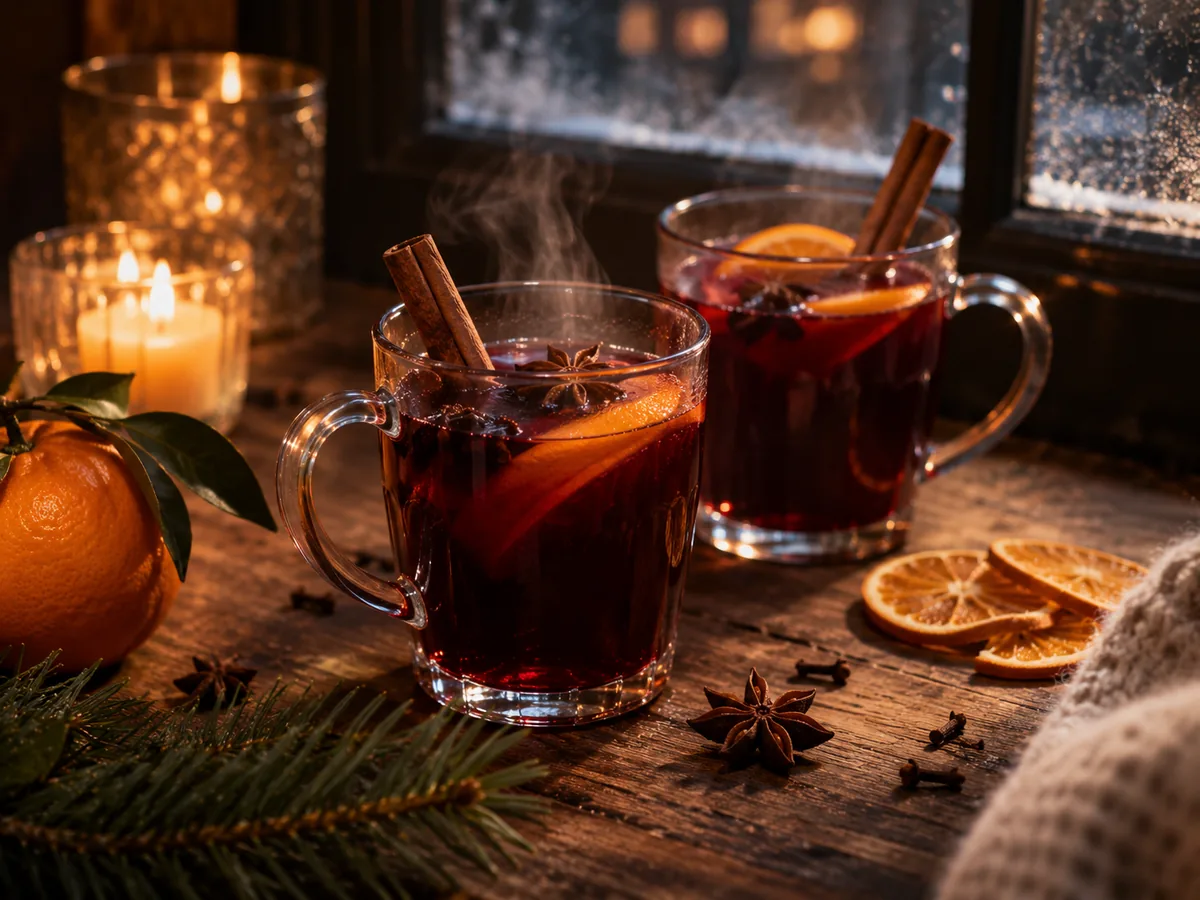
Mulled wine is red wine warmed slowly with citrus, spices and a little sweetness. It takes about 20 minutes, fills the house with the smell of cinnamon and orange, and is one of the easiest ways to make a cold Park City evening feel cozy. Here is how we make it, which wine to use and the one mistake to avoid.
Quick answers
What is mulled wine? Red wine gently heated with spices such as cinnamon, cloves and star anise, plus orange and a sweetener.
What wine is best for mulled wine? A dry, fruity, inexpensive red with soft tannins, such as Merlot, Garnacha or Zinfandel.
Should mulled wine boil? No. Keep it just below a simmer. Boiling cooks off flavor and alcohol and can turn the spices bitter.
How long does it take? About 5 minutes of prep and 15–20 minutes of gentle heating.
Can I make it ahead? Yes. Strain it, refrigerate for up to 3 days and rewarm gently before serving.
Mulled wine recipe
Makes: about 6 small mugs · Prep: 5 minutes · Cook: 15–20 minutes
Ingredients
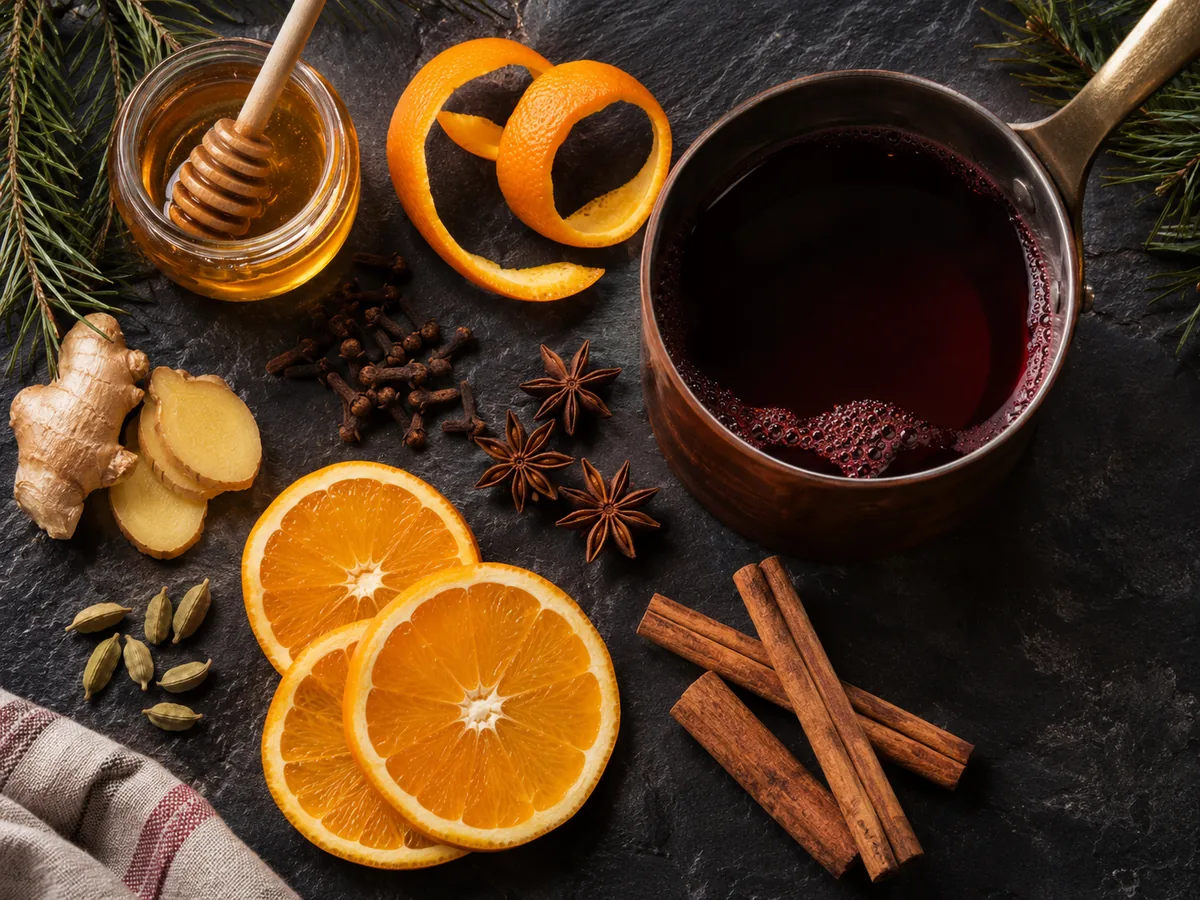
1 bottle (750 ml) dry, fruity red wine
1 orange, sliced into rounds (plus a few strips of peel)
2 cinnamon sticks
4–6 whole cloves
2 star anise
2–4 tablespoons honey, maple syrup or sugar, to taste
Optional: 1/4 cup (60 ml) brandy, a few cardamom pods or a slice of fresh ginger
Steps
Add the wine, orange, spices and 2 tablespoons of sweetener to a saucepan.
Warm over low to medium-low heat until it steams and small bubbles form at the edge. Do not let it boil.
Keep it on low for 15–20 minutes so the spices can steep.
Taste and add more sweetener if you like. Stir in the brandy now, if using.
Strain or ladle carefully, and serve warm with a fresh orange slice or cinnamon stick.
Which wine to use
Save your best bottles for the glass. Mulled wine wants a red that is dry, fruity and not too expensive, because the spices and orange will take center stage.
Good picks: Merlot, Garnacha (Grenache), Zinfandel, Montepulciano or a young Tempranillo.
Skip: very oaky or very tannic reds. Heat and spice make tannin taste harsher and oak taste bitter.
The one mistake to avoid
Boiling. Once mulled wine bubbles hard, the alcohol and the fruity aromas evaporate, and cloves and orange pith can turn bitter. Low heat and a little patience give a smoother, rounder drink. A slow cooker on low works well for a crowd.
Easy variations
Glühwein style: the German classic, with lemon as well as orange and a touch more cinnamon and clove.
White mulled wine: use a dry, aromatic white such as Riesling or Pinot Grigio, with apple, pear, honey and a little ginger.
Alcohol-free: swap the wine for unsweetened grape juice or apple cider, use the same spices and skip the added sugar.
How to store and reheat it
Let leftovers cool, strain out the spices and fruit, and keep them covered in the fridge for up to 3 days. Rewarm gently on the stove, again without boiling. Leaving the spices in overnight makes the flavor bitter.
Warm up with us
My advice is to warm the wine gently and never let it boil, which can dull the flavors. Add whole spices and taste as it steeps so they bring warmth without overpowering the wine.
Mulled wine is a great way to start a winter evening at home. When you want someone else to do the pouring, come see us at Studio Crossing, and take a look at our menus.