Champagne can feel like a wine with a lot of rules. Here's a simple guide to what's in the glass, what the label means, and how to find a bottle you'll enjoy.
Champagne has a way of making an occasion feel special. But you don't need to know every producer, vintage, or vineyard to enjoy it. Start with a few basics, taste what you like, and let curiosity take it from there.
Quick answers
What makes Champagne Champagne? It's sparkling wine from the Champagne region of France, made under that region's rules.
What grapes are in it? Mostly Chardonnay, Pinot Noir and Meunier, often blended.
What does "Brut" mean? A dry style, with less than 12 grams of sugar per liter.
Is Extra Dry drier than Brut? No. Extra Dry is actually a little sweeter.
What's a good first bottle? A non-vintage Brut.
First, what makes Champagne Champagne?
Champagne is sparkling wine from the Champagne region of France. The name is protected, and the wine must follow rules for its growing area and production. Other sparkling wines can be wonderful, but they can't be called Champagne unless they come from that region and meet its requirements.
Champagne is made using a method that creates its bubbles through a second fermentation in the bottle. That process, along with aging, helps give Champagne its fine bubbles and can bring flavors like toast, pastry, or brioche.
Three grapes to know
The three most widely used Champagne grapes are Chardonnay, Pinot Noir, and Meunier. Chardonnay often brings freshness and citrus; Pinot Noir can add structure and body; Meunier is often associated with fruitiness and a rounder feel. Many Champagnes blend two or all three.
You may also see these terms on a label:
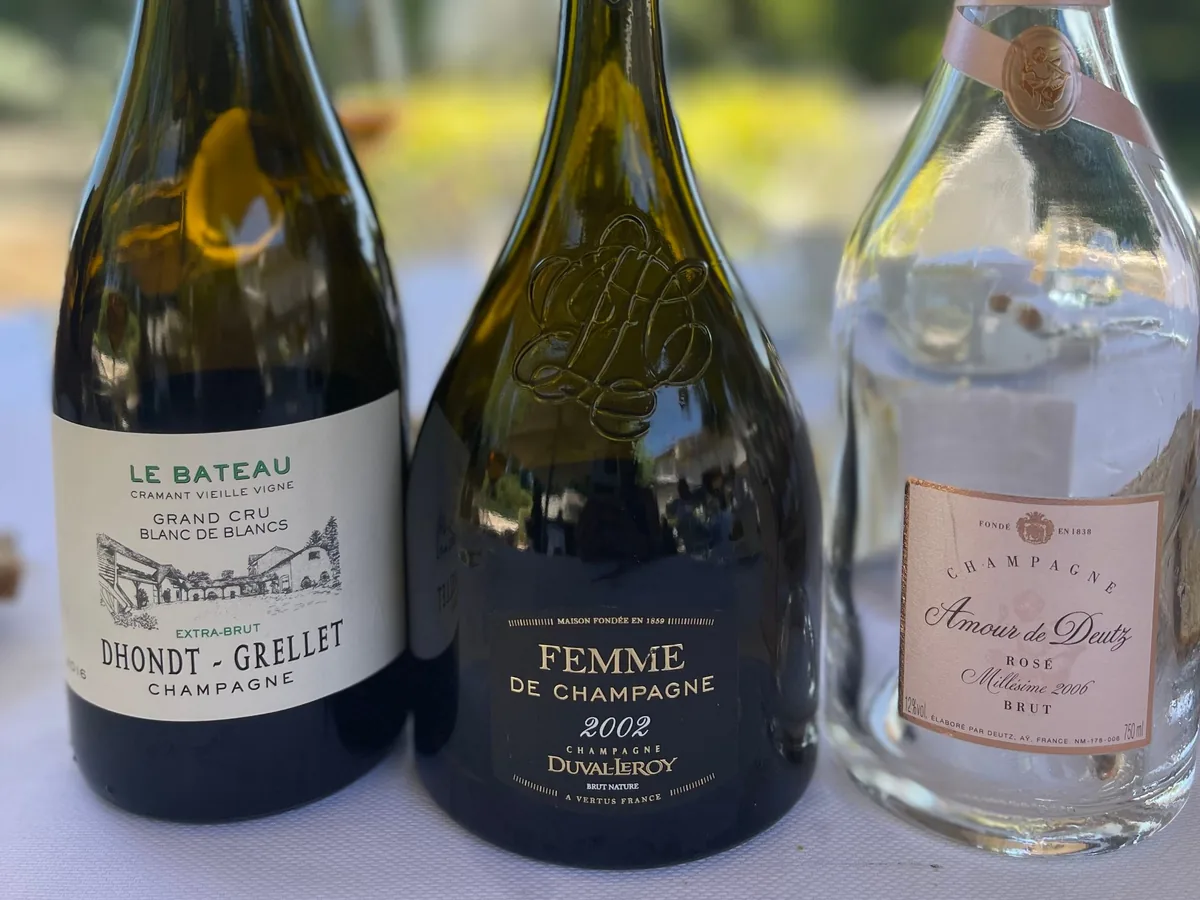
Blanc de Blancs means the Champagne is made from white grapes, most often Chardonnay.
Blanc de Noirs means it is made from dark-skinned grapes, usually Pinot Noir, Meunier, or both.
Rosé Champagne is most often made by blending in a little still red wine, though some producers use skin contact instead.
What does "Brut" mean?
"Brut" describes the Champagne's dosage, or final sugar level. Brut Champagne contains less than 12 grams of sugar per liter. It's a useful place to start if you're looking for a dry style.
A small label-reading surprise: Extra Dry is sweeter than Brut. The names can sound like they mean the opposite, so if you like a drier taste, look for "Brut," "Extra Brut," or "Brut Nature." Brut Nature has less than 3 grams of sugar per liter and no added dosage sugar.
A simple first bottle
For a first Champagne, try a non-vintage Brut. "Non-vintage" means the wine is blended from more than one harvest year. Producers use reserve wines and blending to create a house style that stays recognizable from bottle to bottle. It's often a friendly introduction because the style is designed to be enjoyed without needing to wait for a special vintage or occasion.
From there, follow your preferences. Like citrus and freshness? Try a Blanc de Blancs. Want more structure and red-fruit character? Explore a Pinot Noir-led blend or a Blanc de Noirs. In the mood for something celebratory and fruit-forward? Pour a rosé.
Champagne belongs at the table, too
Champagne is lovely for a toast, but it's also a versatile food wine. Its acidity and bubbles can work beautifully with salty snacks, fried foods, seafood, cheeses, and richer dishes. Try it with potato chips or fries for a simple, very satisfying pairing. It's also one of our favorite picks for Thanksgiving dinner.
The bottles in this photo show just how much personality Champagne can have, from Blanc de Blancs to Brut Nature and rosé. That range is part of the fun: Champagne isn't one single taste or one special-occasion rule. It's a region, a method, and many different styles waiting to be explored.
At Tannin Bar, we believe wine is meant to be enjoyed and discovered. If Champagne is new to you, tell us what you usually like in a wine and we'll help you find a glass to start with. Also be sure to join us for some Champagne Sabering! Take a look at our menus too.