From sunlit Adriatic islands to inland hills, wine in Croatia is more than something poured with dinner. It's part of the country's landscape, local identity, and long history.
Croatia may be better known to some travelers for its coastline than for its wine, but the two are closely connected. Vineyards follow the Adriatic, climb hillsides, and grow across inland regions. In many places, the wine in your glass tells you something about the landscape and the people who have cared for it.
Quick answers
Does Croatia make good wine? Yes, with a long history and many local grapes you won't find elsewhere.
What are the main wine regions? Coastal Istria and Dalmatia, and inland Slavonia and the Croatian Danube region.
What is Croatia's most planted grape? Graševina, a white grape.
Is Plavac Mali the same as Zinfandel? No. It's a distinct Croatian grape, but Zinfandel is one of its parents.
A history that reaches back centuries
Winegrowing in Croatia has deep roots. Ancient Greek settlers cultivated vines along the Adriatic, and winemaking continued under Roman rule. The history is not identical in every part of the country, but grape growing has long been woven into life along the coast and inland.
That history is visible in places such as Primošten, where generations of growers shaped rugged land into vineyards. The traditional stone walls there help protect the soil from erosion and show how much work went into making grape growing possible on the coast. The vineyard landscape is on UNESCO's Tentative List for World Heritage recognition.
One country, many wine personalities
Croatia's wine regions offer striking contrasts. Coastal areas such as Istria and Dalmatia are shaped by the Adriatic and their varied terrain. Inland, Slavonia and the Croatian Danube region are known for white wines, including Graševina.
Some Croatian grapes to look for:
Graševina is the country's most widely planted variety. It can make fresh, lively whites, as well as richer, more layered wines.
Malvazija Istarska is a signature white grape of Istria, often made in fragrant, fresh styles.
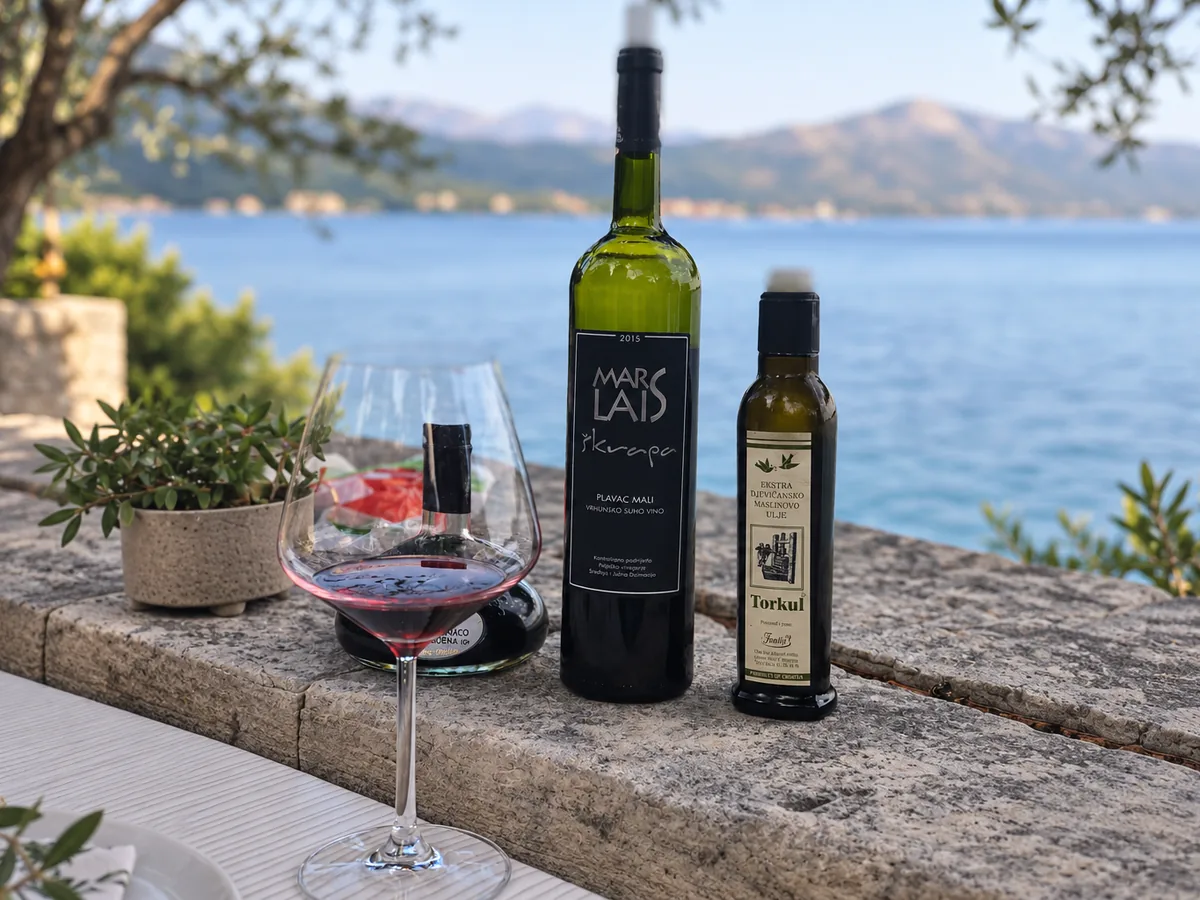
Plavac Mali is a prominent Dalmatian red, grown on steep coastal slopes and islands.
Pošip, Grk, and Babić are among the other distinctive grapes that show the range of local wine traditions.
Plavac Mali and its Zinfandel connection
Plavac Mali is Croatian in origin and is especially associated with Dalmatia. DNA research shows that it is a natural offspring of two Croatian grape varieties: Crljenak Kaštelanski, which is genetically identical to Zinfandel, and Dobričić. The exact place and date of that natural crossing aren't known, but its Croatian roots are. Plavac Mali is related to Zinfandel, but it is a distinct grape.
Why wine matters
Wine in Croatia connects agriculture with food, family, hospitality, and regional pride. Local grapes preserve a sense of place, while family wineries and wine routes invite visitors to experience the country beyond its famous beaches. Croatia's wine culture is not one single style. It's a collection of regional stories, each shaped by its own climate, soil, traditions, and people.

That is what makes Croatian wine so interesting to explore. A glass of Graševina from inland Croatia and a glass of Plavac Mali from the Dalmatian coast can come from the same country and feel worlds apart.
At Tannin Bar, we love wines that open a door to somewhere new. Croatian wines offer exactly that: a chance to taste the landscape, discover grapes you may not know yet, and experience a country through the people who make its wine. Take a look at our menus, and ask us what's open tonight.