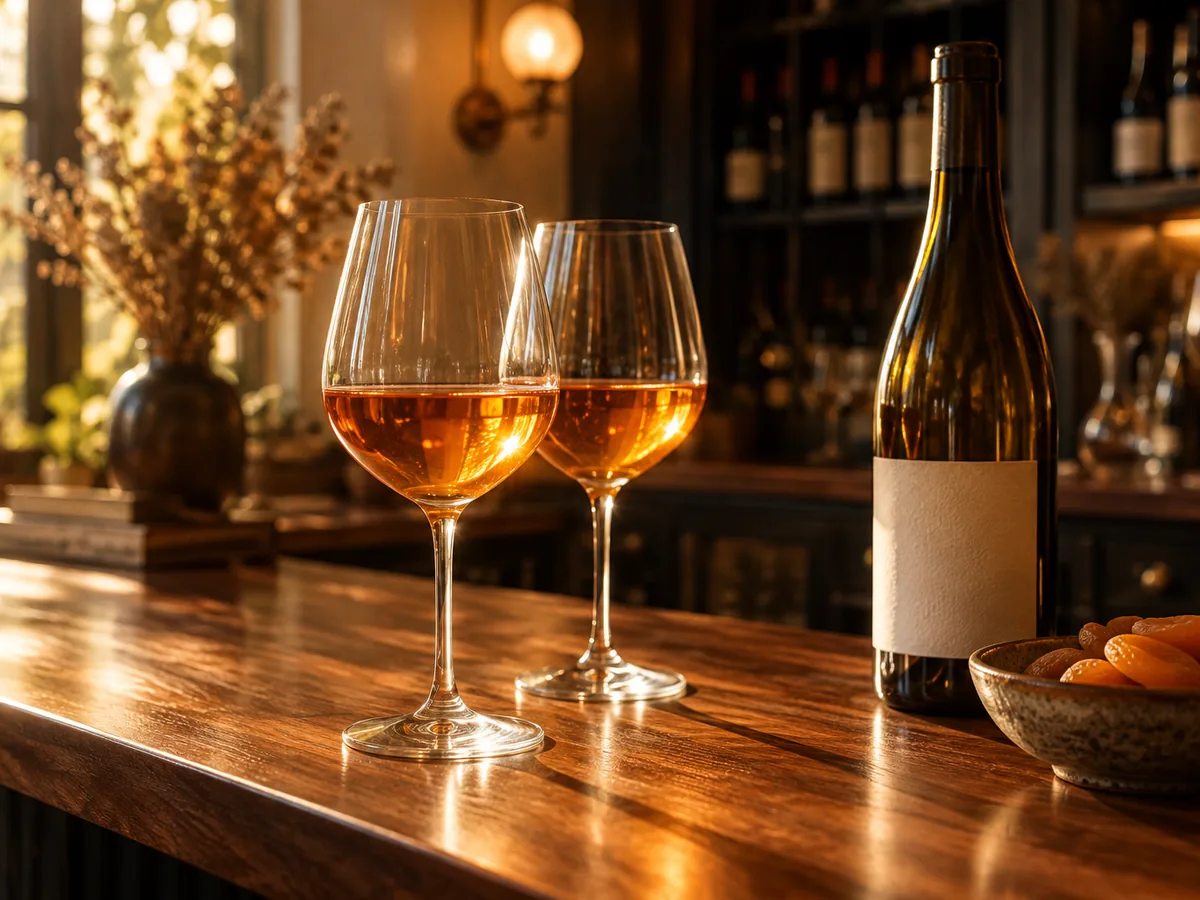
“Orange wine is made from white grapes fermented with their skins, which gives the wine its golden, amber or orange color,” says Tannin Bar co-founder Nicole. “The skins also add texture and a little grip, almost like a light red.” If you’ve seen it on a wine list and wondered what to expect, here’s a guide.
Quick answers
Is orange wine made from oranges? No. It’s made from white grapes. Its color comes from contact with the grape skins.
What is skin-contact wine? It’s a common name for white wine made with extended contact between the juice and skins. “Orange wine” is often used for this style, though the terms aren’t always used in exactly the same way.
What does it taste like? It varies, but you might find dried apricot, orange peel, tea, honey or nutty notes, along with more texture and grip than in many white wines.
Is orange wine the same as natural wine? No. They describe different things. Orange wine refers to a winemaking method; natural wine generally refers to an approach to farming and winemaking. Some wines are both.
How should I serve it? Usually cool, but not ice-cold. The ideal temperature depends on the wine’s style and body.
How orange wine is made
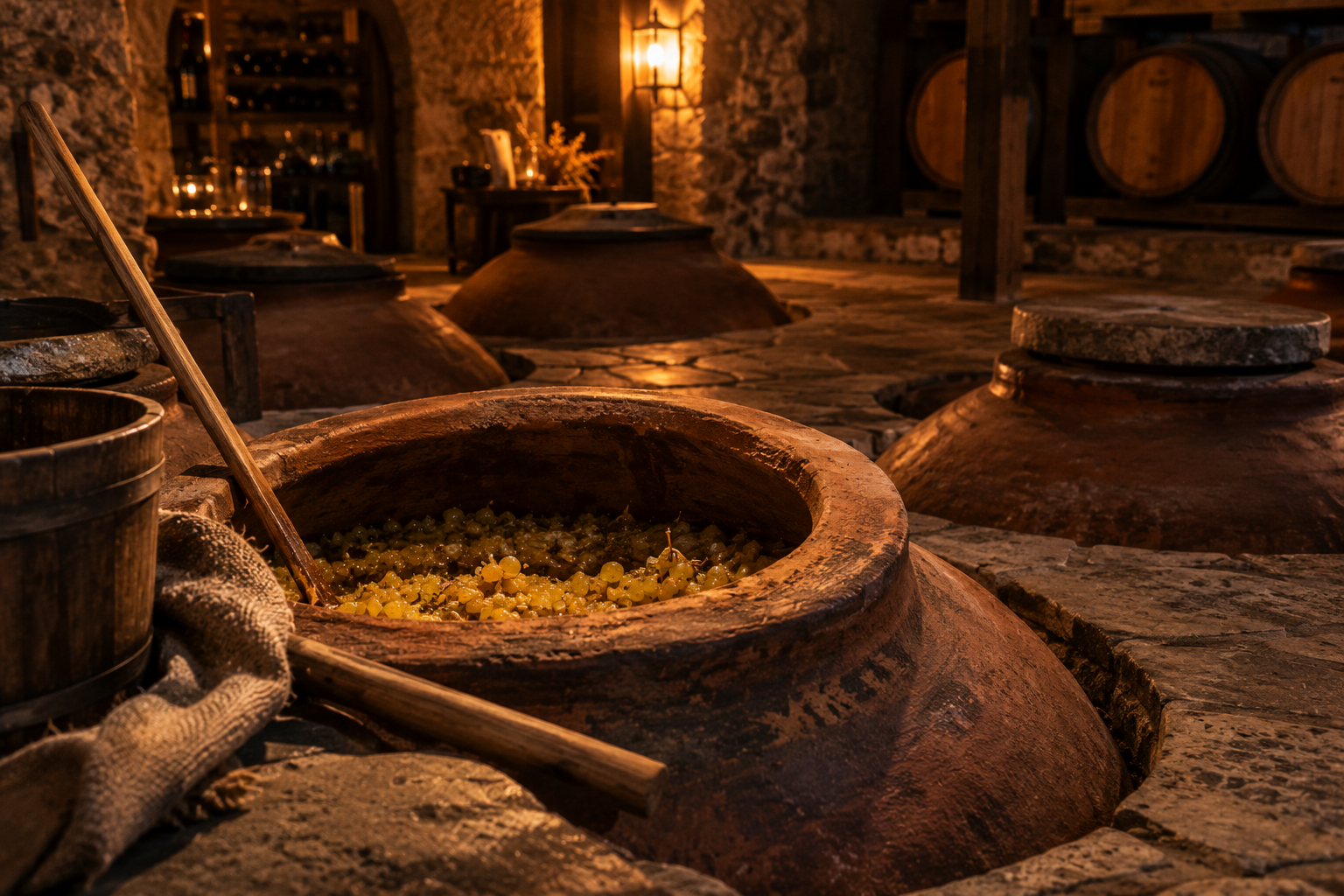
For many white wines, the grapes are pressed and the juice is separated from the skins before fermentation. For orange wine, the juice stays in contact with the skins during fermentation. That contact might last a few days or several weeks, and in some traditional styles, longer. The skins can contribute color, aroma, flavor and tannin.
The method has ancient roots. In Georgia, winemakers have made wine in large clay vessels called qvevri for thousands of years. In recent decades, winemakers in northeastern Italy and western Slovenia helped renew interest in skin-contact white wines. Today, producers make them in many wine regions around the world.
What it tastes like
Orange wine can combine the freshness of a white wine with added texture and grip. Depending on the grape, skin-contact time and winemaking choices, you may find notes such as:
Fruit: dried apricot, quince, orange peel or bruised apple
Savory notes: tea, nuts, honey or dried herbs
Texture: a light to more pronounced drying grip from tannin
More skin contact can add color, flavor and tannin, but it doesn’t determine the wine’s style on its own. The grape variety and winemaker’s choices matter too.
Orange, white and red: how they compare
White | Orange | Red | |
|---|---|---|---|
Grapes | White | White | Red |
Skins during fermentation | Removed | Left in | Left in |
Color | Pale straw to gold | Gold to amber | Ruby to garnet |
Tannin | Very little | Light to medium | Medium to high |
Serve at | Chilled | Cool | Cellar to room temperature |
What to eat with orange wine
That combination of freshness and grip makes orange wine one of the most flexible food wines there is. It handles flavors that can be tricky for both whites and reds:
Spice and heat, where its texture holds up better than most whites
Pickled and fermented foods, from kimchi to house pickles
Cheese and charcuterie, especially nutty, aged cheeses
Roasted vegetables and earthy dishes, like beets or mushrooms
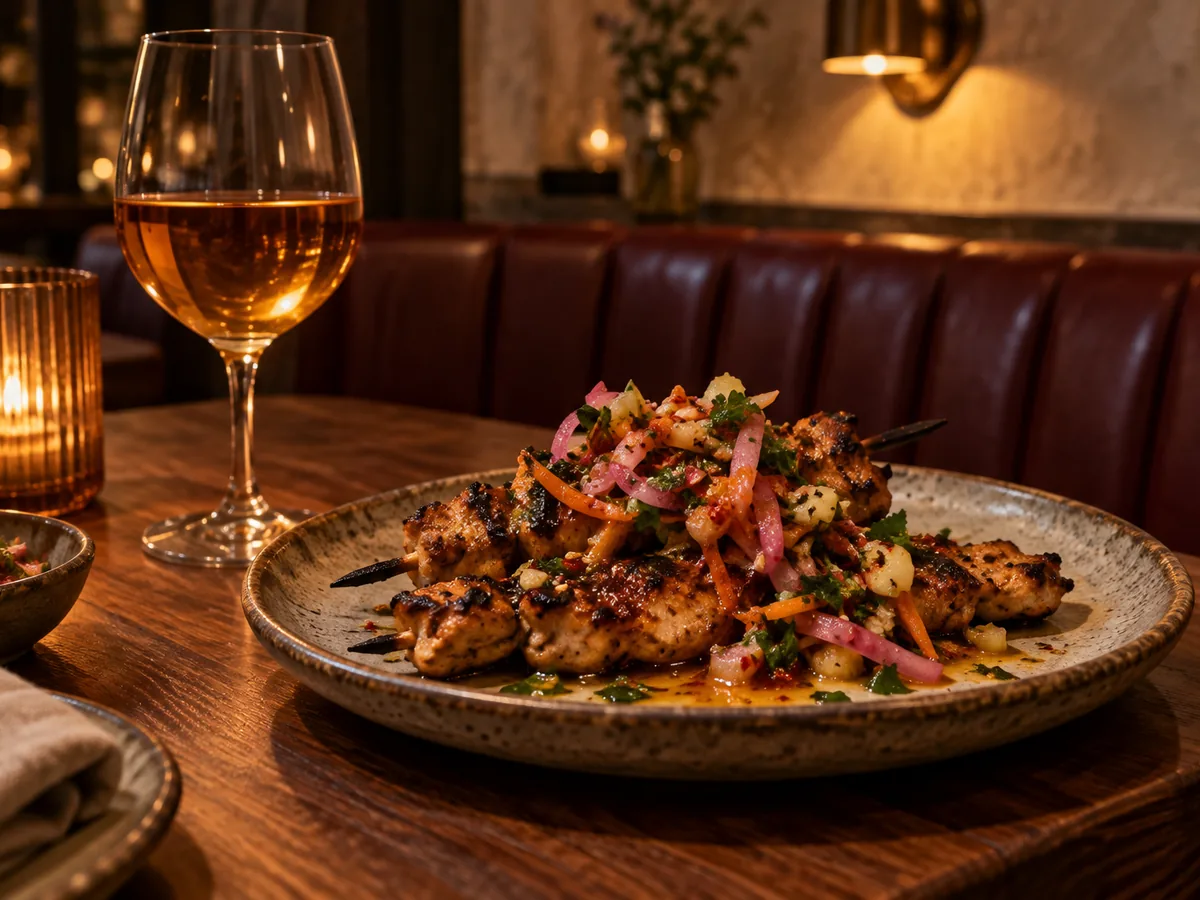
At Tannin, Nicole's pick for orange wine are the honey chili chicken skewers. The wine's skin-contact texture and grip stand up to the smoked chili honey.
One to try
Christina Orange, from Austrian winemaker Christina Netzl and imported by Jenny & François Selections. Made with Chardonnay, Sauvignon Blanc and Welschriesling, it’s a fresh, lively introduction to skin-contact wine.
Find it at Tannin
If you've never had orange wine, it's a great place to start a conversation. Ask us what's open, tell us what you like, and we'll find the glass. Curious about the grip? Read our guide to what tannins are, and take a look at our menus.