Natural wine has gone from a niche in Paris wine bars to a fixture on wine lists everywhere. But there's still a lot of confusion about what it actually is. Is it the same as organic? Why is it sometimes cloudy? Does it taste different? This guide explains what natural wine is, how it's made, how it compares with organic and biodynamic wine, and how to find one you'll love.
Quick answers
What is natural wine? Wine made with as little intervention as possible: organically grown, hand-picked grapes, fermented with the wild yeasts on the grapes, with nothing added or taken away, and little or no added sulfites.
Is there an official definition? Not in the US. France created a voluntary "Vin Méthode Nature" label in 2020, but most natural wine isn't certified.
Is natural wine the same as organic wine? No. Organic rules cover how the grapes are grown and allow many winemaking additives. Natural wine goes further in the cellar.
Why is natural wine cloudy? It's often unfined and unfiltered, so tiny particles of yeast and grape stay in the bottle. That's normal and harmless.
Does natural wine cause fewer hangovers? There's no good scientific evidence for that. Alcohol is the main cause of hangovers, whatever the wine.
How natural wine is made
There's no single rulebook, but most natural winemakers follow the same principles:
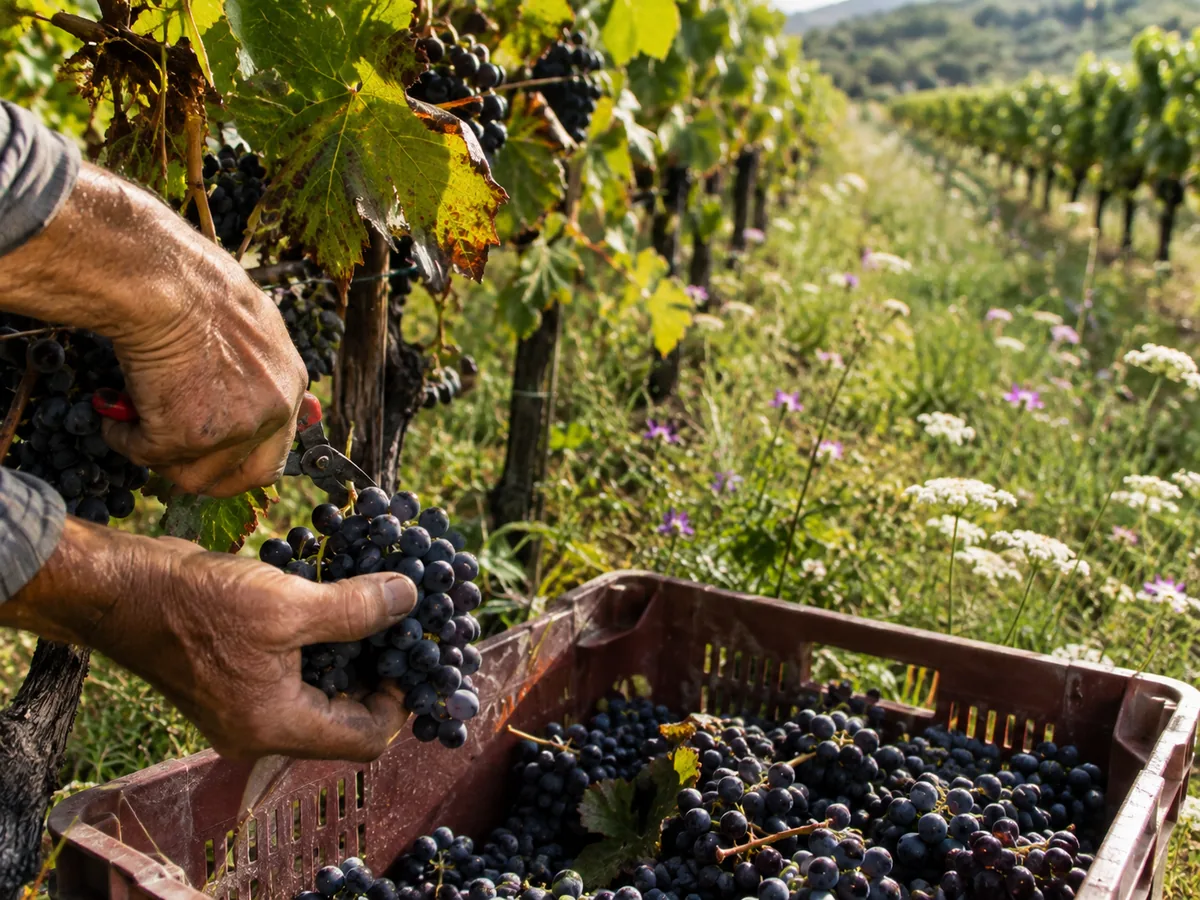
Grapes are farmed organically or biodynamically, without synthetic pesticides or herbicides.
Harvest is by hand.
Fermentation uses only the wild, native yeasts found on the grapes and in the cellar, not added commercial yeast.
Nothing is added: no sugar, acid, tannin powder, oak chips or color.
Nothing is taken away: little or no fining or filtering.
Sulfites are added in very small amounts at bottling, or not at all.
Compare this with the steps in our guide to how wine is made, and you'll see that natural wine keeps the process as simple as possible.
Natural vs organic vs biodynamic wine
Organic | Biodynamic | Natural | |
|---|---|---|---|
In the vineyard | No synthetic chemicals | Organic, plus a holistic farm system and natural preparations | Organic or biodynamic |
In the cellar | Many additives allowed | Fewer additives allowed | Nothing added or removed |
Yeast | Any | Native preferred | Native only |
Sulfites | Limited (none added for "organic wine" in the US) | Limited | Very low or none added |
Certification | Yes, regulated | Yes (Demeter, Biodyvin) | Mostly none |
Read more about the farming side in our guide to biodynamic wine.
What does natural wine taste like?
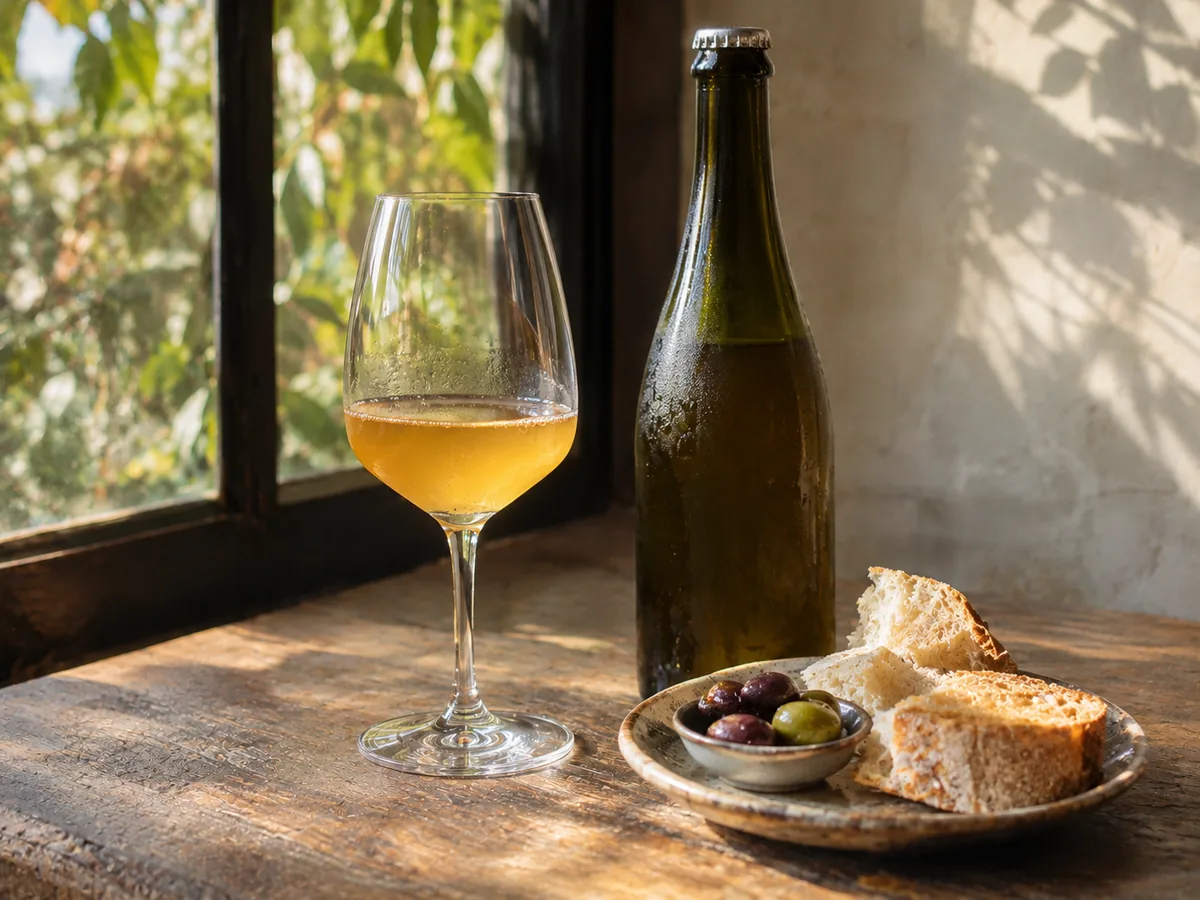
There's no single natural wine taste, but many share a few traits: bright acidity, vivid fresh fruit, and a lively, juicy, sometimes slightly wild character. Because nothing is filtered out, they can be hazy and have more texture. Some are clean and pure; others are deliberately funky, with cider-like, earthy or yeasty notes. Light, chillable reds, sparkling pét-nats and skin-contact whites are especially common in the natural wine world. If you've enjoyed an orange wine, you've likely already tried one.
Pét-nat: natural sparkling wine
Pétillant naturel, or pét-nat, is bottled before its first fermentation has finished, so the bubbles form naturally in the bottle. It's usually cloudy, gently fizzy and fun, often with a crown cap like a beer. It's an older and simpler method than Champagne's; see our guide to Champagne for beginners for the difference.
Faults vs funk
Because natural wines have few protections, some can develop real faults, like a mousy taste on the finish or vinegar-like notes. A good natural wine can be wild and still taste clean and delicious. If a wine tastes unpleasant to you, it isn't "supposed" to; trust your own taste.
How to buy and serve natural wine
Look for the grower: since there's usually no label to certify it, the producer matters most. Ask a wine shop or sommelier who you trust.
Keep it cool: with few sulfites, natural wine is more fragile in heat. Store it somewhere cool and dark.
Serve it cool: many natural reds are lovely slightly chilled, at about 55–60°F (13–16°C).
Give it a swirl: some natural wines smell a little reductive when first opened; a few minutes of air often fixes it.
Drink it fresh: once opened, finish it within 1–3 days.
Nicole on natural wine
What I love about natural wine is very similar to what I love about biodynamic wines. I want to taste the grape, the soil and the place it came from, and I love when a winemaker lets those elements shine without getting in the way. One I’d recommend to someone just starting out is our Christina Orange from Carnuntum, Austria. It’s fresh, approachable and a fun introduction to the world of natural wine without being overly funky.
Curious to explore low-intervention wines? Ask our team what's pouring by the glass, and take a look at our menus.